End of Year Tidying Project?

If you are considering tidying up and decluttering at the end of 2025 here are a few tips and tools to help you.

Start by visualizing what you’d like your space to look like in 2026. Take a few moments to close your eyes and picture it. Notice how you feel after this brief visualization. What are some of the overall differences between the space you visualized and the one you have now? You might create a list of some of the major differences. Now identify two-five things that you could change that would help you to move towards that ideal space

Some of those things might be:

  • Letting go of clothes that no longer serve you

  • Reducing paper of papers

  • Cleaning off a counter top or table

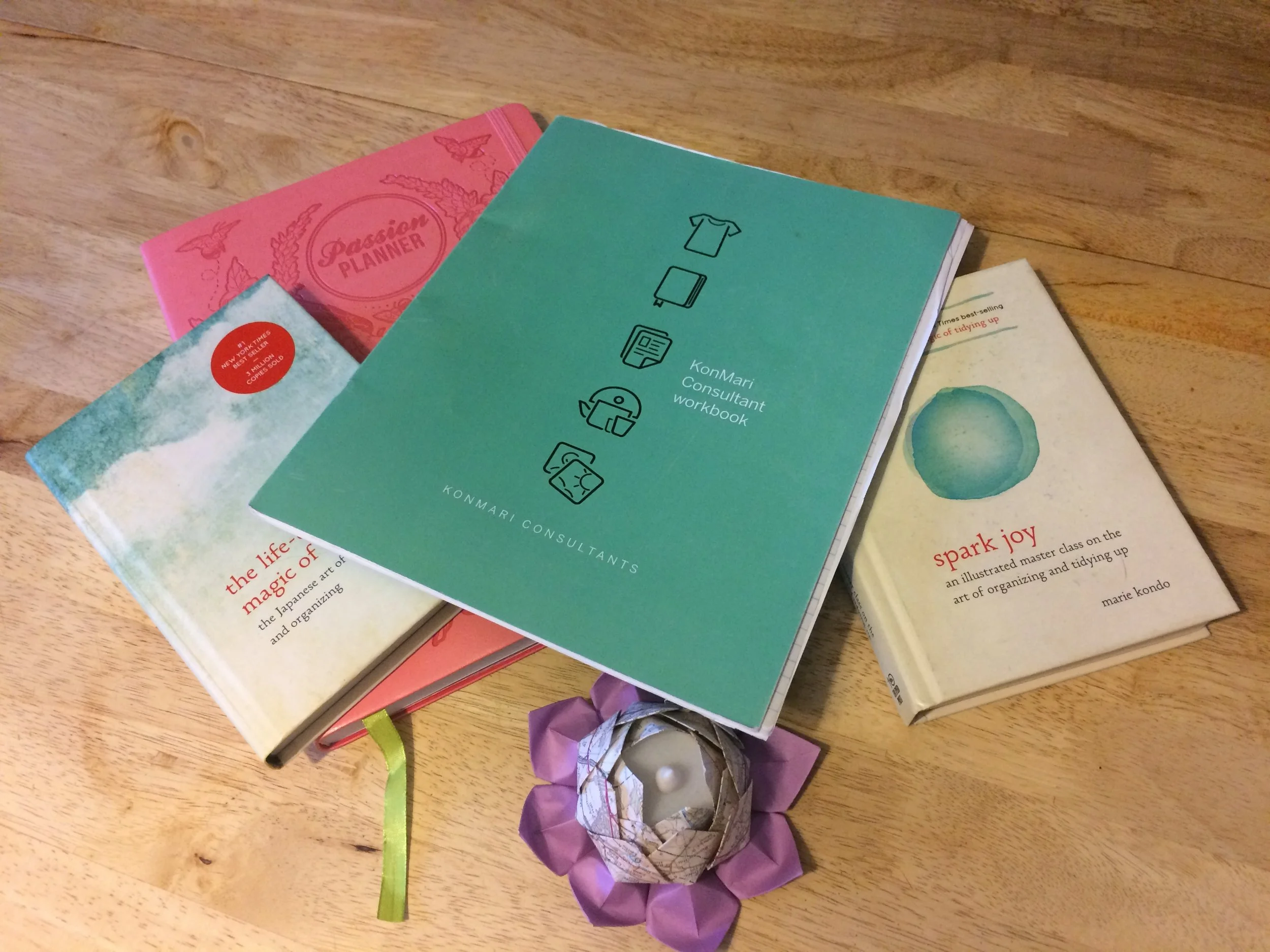
No matter what you identify, pick something small that doesn’t feel too daunting to start. In the KonMari method, we start with the easiest category first. This is typically clothes for most people but it could be a different category for you. (You can download a free KonMari checklist )

If you’re starting with a pile of clothing 👚, start with some summer clothing items. Are you excited to wear this item next summer? If not let it go with a sense of gratitude. Carefully consider why these clothes are in this pile or space. Is there a common theme? If this is a pile of clothes that need to be mended, can you get them repaired by the end of the year? If you don’t want to spend your time taking them to a tailor or repairing them yourself, consider letting them go. The TakeBackBag (https://www.trashie.io/tbb-collection) is a great option for clothes that are ready to be recycled.

When cleaning off a countertop or table, tidy by category rather than by section. Gather up all the items of a similar category first and then decide if you want to keep each item. For example, gather all the magazines together. If there are any you want to keep, set them aside. Thankfully recycle the magazines that you aren’t excited about leafing through. Finally, decide where you want to store the magazines so you can enjoy reading them. Perhaps in your ideal space you can designate a special chair for relaxation and reading.

Organizing paper can be challenging and for most of my clients it’s the most challenging category. Start by sorting through the pile for any junk mail or documents that you can easily recycle. If it’s something that you already have digitally, recycle it. Pause and notice that you’ve made some progress in the pile. Taking time to recognize the successes along the way is important. After your pause, start to put similar types of documents together. For example, papers about healthcare appointments and health insurance could be collected together. Take a moment to notice the general themes and types of paper that you have. Reflect on your ideal space. What would be the best way to store paper in that version of your space? Let go of as much paper as you can and then file the rest so you can find it later. One of my favorite temporary organizational tools for paper are these vertical files, which can be stored in a filing cabinet or standing up on a bookshelf .  

No mater what you type of things you chose to organize at the end of the year, give yourself permission to celebrate your efforts and success. It will give you additional motivation to keep tidying up in the new year. 

Is Your Home Tidy Enough

Inspired by Brené Brown’s Daring Greatly

If you are starting or re-connecting to your tidy journey, ask yourself what “tidy enough” looks like for you?

  • Does your space need to be instagram perfect?

  • Do you want to spend time finding the perfect storage container?

  • How much time do you want to spend putting things away and taking care of your things?

My suggestion is to let go of tidy perfection that you see on Marie Kondo’s socials. Her version of tidy has changed but it’s still tidy for her.

My space is tidy enough to support the way I want to life my life. I want my life to have space for family (including my pets), friends, volunteering, yoga, running, and work. I think about my priorities and values before bringing something else Ito my space. As someone who loved shopping, this is truly hard work. (I’ve had to learn to become comfortable returning things.)

Even though I love helping and supporting others on their tidy journey, I want to spend my free time doing other things. I don’t want to spend my time focused on interior/tidy perfection.

My space is tidy enough. It’s tidy enough so I can find things. It’s tidy enough so I don’t feel overwhelmed by the need two put things away. It’s tidy enough so I can enjoy cooking at home. My space isn’t perfect and it doesn’t need to be perfect. It’s tidy enough so I can live.

Practice finding your version of a tidy space. A space that isn’t perfect but is tidy enough to support the life you want to live.

*Don’t forget to check out the Personal Values Card Sort from Dr. Jenny Shield. “This tool is frequently used in Acceptance & Commitment Therapy (ACT) and motivational interviewing—and it’s free, with no sign-up required”

De-Cluttering for the Holidays

Is your kitchen or dining room table cluttered and keeping you from hosting?

Or have you already committed to hosting but feel overwhelmed by the mess?

Don’t worry—you’re not alone, and it’s never too late to tackle the clutter. Here are five simple tips to help you reclaim your space, reduce overwhelm, and get ready to welcome your guests.

1. Picture Your Ideal Space

Before diving into decluttering, take a moment to visualize what you want your table and dining area to look like. Imagine the clean surfaces, the festive decor, and the inviting atmosphere.

Visualization isn’t just a feel-good exercise—it’s a powerful way to counteract negative self-talk and motivate yourself. Forgive yourself for the current state of your space and let go of any guilt. What matters most is the steps you take now to create the space you want.

2. Declutter by Category

Decluttering by category (instead of by location) is a game-changer. Inspired by the KonMari method, this approach helps you stay focused and prevents overwhelm. Start with one category—such as paper, dishes, or decor—and tackle it fully before moving on to the next.

If you’re unfamiliar with the KonMari categories, download the free KonMari checklist from my website. (Yes, you’ll need to share your email address, but don’t worry—no junk mail. Adding clutter to your inbox goes against my mission!)

3. Decide What to Keep

Let’s say you uncover a stack of mail buried under other items. Paper clutter can feel especially draining, but don’t let it derail you.

Take a deep breath and remind yourself: action cures fear. Sort the stack by deciding what you want to keep and what you need to keep. Anything that doesn’t fit into either category? Recycle or shred it guilt-free.

For papers you need to keep, place them in a designated to-do or pending bin. For papers you want to keep, take a moment to store them thoughtfully in a place that aligns with their purpose—whether that’s a sentimental keepsake box or a file folder.

4. Find Homes for Items

Think of your items as having “friends.” Lonely forks should return to the utensil drawer. Solo gloves? They belong with the other gloves until their match appears.

Storing items with their “friends” helps you find them quickly and reduces future clutter. Apply this mindset to every category you declutter—it’s simple, effective, and oddly satisfying.

5. Celebrate & Rest

Once everything has a home and your space feels refreshed, take a moment to celebrate your hard work.

Reward yourself in a way that feels restorative: enjoy a cup of tea, treat yourself to a cozy lunch, or simply sit for five minutes and bask in the peacefulness of your newly cleared space. Decluttering is an act of self-care, and you deserve to savor the accomplishment.

Pro Tip for Paper Clutter
Paper is often the trickiest category to tackle. If you feel stuck, I’m here to help!

I offer virtual organizing sessions, including my popular “sandwich edition” sessions for just $65. Perfect for those who prefer to work independently but need a little guidance, these sessions are tailored to your unique needs and can make all the difference in tackling challenging clutter.

This holiday season, give yourself the gift of a clutter-free, welcoming home. With these simple steps, you can transform overwhelm into action—and enjoy your celebrations with confidence.

Let’s declutter and make room for joy!

Don't Buy Stuff For Your Stuff

Why Less is More: Rethinking Your Organizational Tools

I’m often drawn to articles from Real Simple for their tempting organizational tips and clever tools. But as a seasoned home organizer, I can’t help but notice that many of these solutions miss the mark. The truth is, the secret to a clutter-free home isn’t in buying more tools to organize—it’s in having fewer things to organize in the first place.

Every new item you bring into your space requires time and energy to maintain. Before purchasing anything, ask yourself: Do I really need this? and Where will it go? A great way to test this out is by using a cardboard box—something most of us have lying around at home. Before you buy that chic organizer or trendy storage solution, use a box to simulate how it will function in your space.

For example, before rushing to buy those beautiful wicker baskets 🧺 or clear bins you saw on TikTok to revamp your pantry, try a simple experiment. Place some items in a box 📦 you already own, and observe how it fits into your pantry setup. Is it easy to slide the box in and out? Are you able to keep everything neatly organized, or do the contents get jumbled together? These small tests can reveal if the storage solution you had in mind is truly practical for your needs.

The key is to experiment first with what you already have. Once you’ve identified what works and what doesn’t, you’ll be in a much better position to make mindful, purposeful purchases that actually lead to long-lasting organization not more clutter.

If you are interested in talking with me about how I can help you to bring harmony back to your space, schedule a phone free consultation today. (This isn’t a sales call. I want to help you reduce stress and clutter.)

Schedule Free Phone Consultation


My favorite organizing tools (in case that’s most helpful):
Clear battery organizer

Clear Under Sink organizer

Trapezoid storage box

Make Your Table a Clutter-Free Zone

The kitchen or dining room tables are typical sources of clutter and stress. Despite one's best efforts, mail piles up, and projects linger. The table is ideal for holding things because it's big and seldom used for formal dining occasions. Many of us carve out space on the table, eating a meal surrounded by our stuff.

My mom has a unique approach to keeping her dining table clear. She keeps it set all the time for a formal occasion. Tablecloths, chargers, and linen napkins are not just functional for her, they spark joy. She has tried to instill upon me a love of a beautiful tablecloth and coordinating placemat. However, cleaning and caring for placemats isn't my cup of tea. After a recent visit to her house, I saw an additional benefit to her beautiful set table. Clutter can only develop on the table if there is room for it. Her table setting brings her joy and keeps the table a clutter-free zone!

Ready to transform your dining or kitchen table into a clutter-free zone? Here's a simple experiment to try. Clear off the table for yourself and set it up for a special meal. Find that dormant tablecloth in your house, and set out some dishes, flatware, and glasses. If you aren't a fan of placemats, check out your local thrift store for some chargers to go underneath your plates. By taking these small steps, you can start to see a big difference in the clutter levels of your table.

In addition to keeping your table set for meals, create a project zone. Often, I identify a recently emptied shelf for my clients and designate it as the project area. Rather than setting projects on the table, take them to the project zone. If the project zone is full, consider letting go of your new addition or something else lying dormant in the zone. It's challenging! (If you want to build your tidying muscle to prepare for this, don't get a cart or a basket the next time you go to Target. Once your hands are full, you have to prioritize. It's the same concept.)

I will work on setting up my table in a way that sparks joy for me, and I'll share some photos soon! 

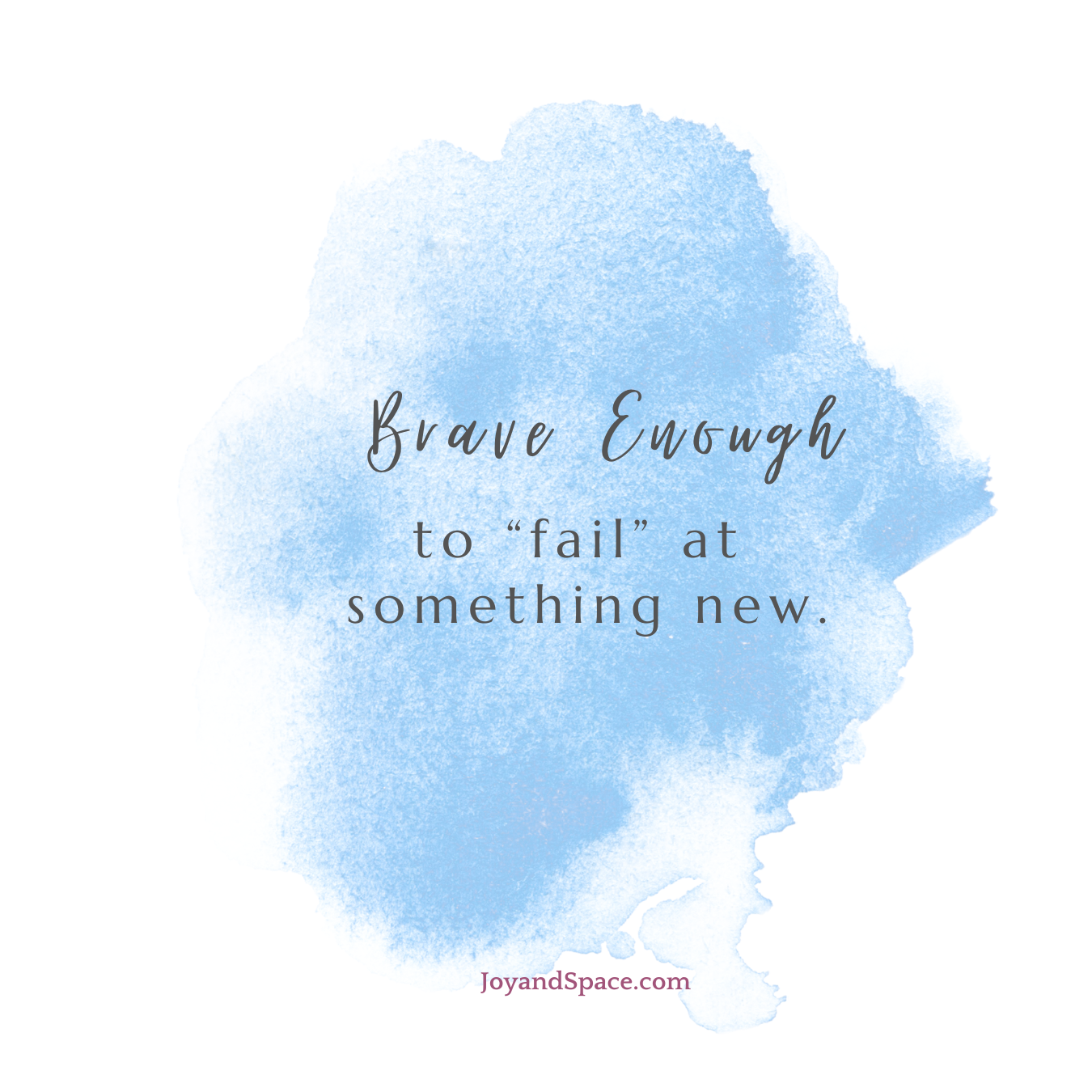
Brave Enough...

“Brave enough to suck at something new.” is attributed to Jon Acuff. However, the quote reminded me of Carol Dweck’s research and books on failure and growth mindset. I modified it to read, Brave enough to fail  at something new.

These concepts have been top of mind for me lately as I engage in graduate study of Genetic 🧬 Counseling. While I love to learn, the process of receiving clinical/medical feedback is intense. I  receive regular, critical feedback on my performance. Each error pulls me deeper into a fixed mindset.


Fortunately, as things tend to do, an article in the new Junior League magazine, The League Life, provided some well timed reflections on growth mindset and failure.


From The League Life “Failure is Not a Dirty Word” by Jacquelyn Bauman


“So how do you flip the script when it feels like outside judgments are forcing you into a fixed mindset?

You need to start with your internal perceptions. The first thing to do is to grant yourself grace - you have failed, you are not a failure. When you feel those labeling and all-or-nothing cognitive distortions coming one, challenge those internal thoughts with evidence to the contrary. If you attempt to do something and do not achieve your goal, instead of thinking, “I am a failure,” prove that cognitive distortion wrong by remembering the times you DID achieve what you set out to do.

Look for takeaways from your current situation that you may be able to use in the future to achieve a different outcome. Use [Carol] Dwek’s concept of the “Power of Yet.” I did not achieve my goal, yet. I am not a leader, yet. By reframing accomplishment as an ever moving target as opposed to an attribute of character, we are able to achieve that growth mindset.” (Link to the full article)

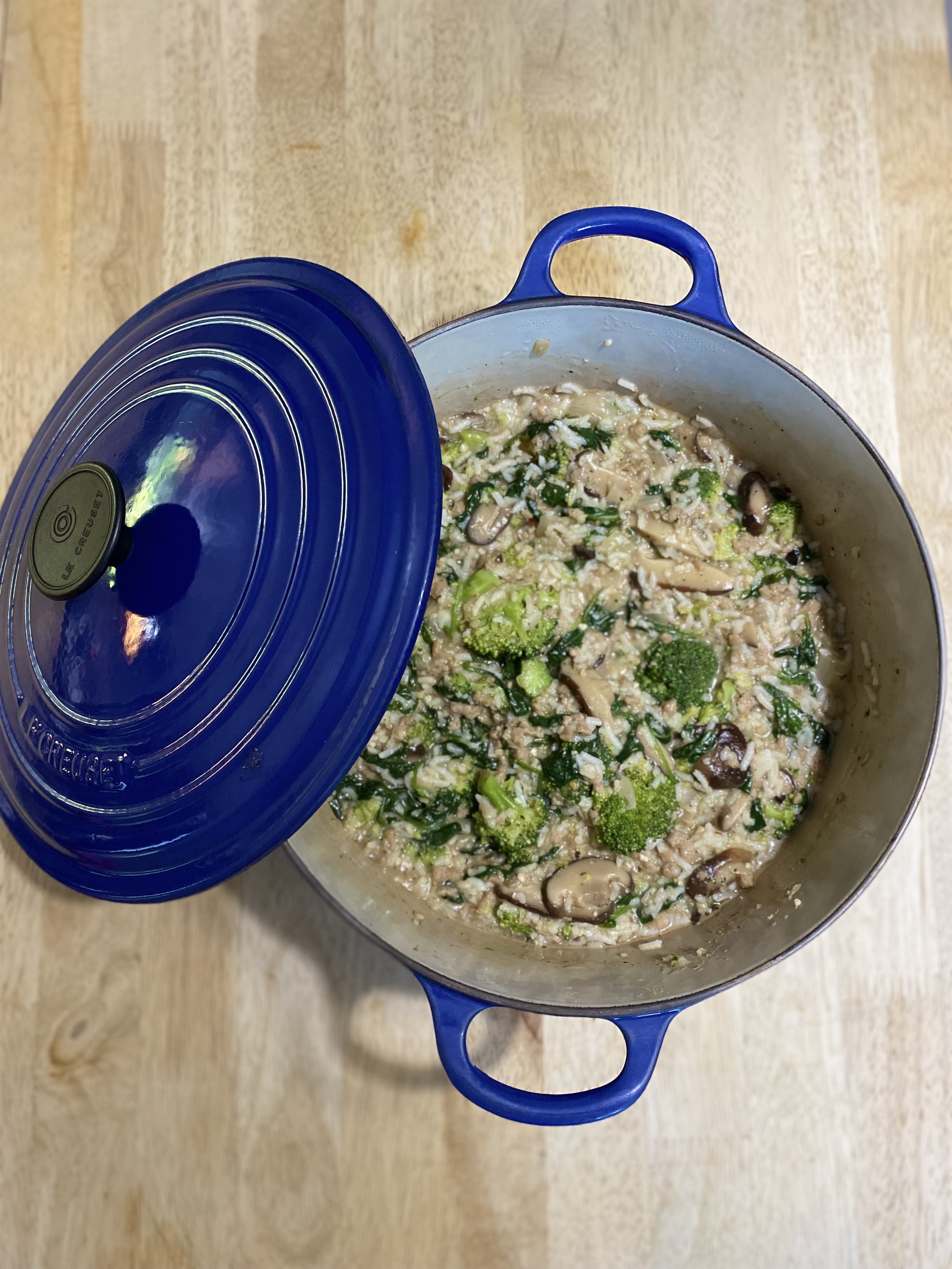
One Pot Mushroom, Broccoli, and Rice

Many of us are short on time and trying to eat more vegetables. Instead of Broccoli 🥦 and Rice 🍚 casserole, try this one pot easy recipe. If you already have rice, it takes about 30 mins to dinner.

One pot mushroom, broccoli, & rice

Groceries to Buy

Cream of mushroom 🍄 soup - enough for 3 cups

3 cups of broccoli 🥦- 2 or three heads (Substitute cauliflower if you have it.)

1 Onion 🧅 chopped or diced

Mushrooms 🍄 (one 10 oz bag frozen)

Spinach - one small 5 oz container

Garlic 🧄

Meat substitute (I used Impossible sausage) - optional

Shredded cheese 🧀- 1 cups - optional


Instructions:

  1. Cook one cup of rice in rice cooker or use riced cauliflower

  2. Prepare soup in another pot or in the microwave

  3. Sauté onions 🧅, garlic 🧄, mushrooms 🍄, and meat substitute (optional) in oil or butter

  4. Add broccoli 🥦 and salt and pepper to taste

  5. Add spinach to wilt

  6. Add half the soup and then mix in rice 🍚

  7. Add other half of the soup and then mix in more rice 🍚

  8. Sprinkle with one cup of cheese 🧀 (optional)


Enjoy!!

Organizing As Body Doubling

When I first heard the term "body doubling," thoughts of cloning and similar science fiction came into my head. However, body doubling refers to completing a task alongside another person. Often these tasks are somewhat daunting. For example, as a reluctant runner, I've found that running with a friend or group is more appealing than on your own. However, as I read more about this concept and how it supports individuals with ADHD, I realized that this term is an excellent descriptor of my work. 

As a home organizer and a body double, I provide support and individualized accountability as my clients approach the "DOOM" boxes 📦 or bags cluttering their homes. Although DOOM stands for Didn't Organize, Only Moved, the term recognizes the emotional weight and reluctance felt when approaching the task of going through these boxes and bags. Having support and positive feedback is helpful when decluttering a DOOM box 📦. I remind clients of their prior successes and talk them through the DOOM bag to reduce guilt and feelings of shame. 

Free DOOM Box Body Doubling

Body doubling has provided many neurodivergent individuals with an accountability partner. As a home organizer specializing in services for those with ADHD/ADD, my services take body doubling even further. For example:

  • Virtual/online sessions start with a guided visualization that anchors/focuses clients in the present moment.

    • Provides anxiety and stress reduction

  • We discuss goals for Organizing, which helps clients to prioritize.

    • Goal setting addresses the executive function impairment of "activation" commonly experienced in ADHD.

  • As an organizer and body double, my presence sustains focus by reducing mental blocks and guiding clients to start and finish Organizing.

    • Sustaining focus is a typical executive function impairment experienced with ADHD.

  • My counseling skills will help clients to manage frustrations and process emotional responses.

  • Clients benefit from the memory of two people. I jog clients' memory of where they put something or remind them what they want to tidy/organize next.


Unlike a group body doubling session, I'm focused on clients' goals and offer individualized support so they can finish Organizing.

  • Rather than prescribed breaks, such as the 15-minute Pomodoro and 5-minute pause, breaks are suggested based on clients' energy levels.

  • My clients and I discuss items, and I serve as a sounding board so clients' don't impulsively let go of something.

  • Mental blocks will arise when organizing. I reduce those and anticipate distractions.


Most importantly, I want my clients to build a habit and learn new skills they can return to with or without me. Positive feedback is an essential aspect of any learning process. Virtual Organizing provides not just a body double but a motivational coach. I believe my clients can and will be tidy and help them identify the unique strengths that will keep them going.


Important Points:

Organizing/Tidying is a form of body doubling.

  • An expert decluttering partner (Master Level KonMari Organizer with M.S. in Clinical Psychology) provides individualized support.

  • The session is a "setting event" that will help those with ADHD take the task of organizing from start to finish.

  • Approach DOOM boxes/bags with support and recognition of emotional resistance and dread.

  • Reduce distractions with a focused zoom session

  • Augment your memory and help you to keep organizing

  • Organizing supports clients as they process emotional responses and manage frustrations.

Schedule Free Consultation
Schedule Virtual Organizing

References:

Ables, K. (2022, June 6). 'body doubling,' an ADHD productivity tool, is flourishing online. The Washington Post. Retrieved June 13, 2022, from https://www.washingtonpost.com/wellness/2022/06/01/virtual-body-doubling-productivity-tiktok/ 


Jeret, A. (2022, March 10). Why people on Tiktok are calling out 'doom boxes' as a sign of ADHD. YourTango. Retrieved June 13, 2022, from https://www.yourtango.com/self/doom-boxes-adhd 


Rohde, L. A., Buitelaar, J. K., Gerlach, M., & Faraone, S. V. (Eds.). (2019). The World Federation of ADHD Guide - Russellbarkley.org. Russell A. Barkley, Ph.D. Retrieved June 13, 2022, from http://russellbarkley.org/factsheets/TheWorldFederationOfAdhdGuide.pdf 

Separating Emotions from Things

Our things are not our emotions or memories. However, we often connect them. For example, items in our home cue memories and feelings and remind us of things we want to do. Learning to separate the two is an essential practice on your decluttering journey.

First, it's a practice and new habit to start noticing the memories and emotions connected to the items in our homes. Start by observing and perhaps write in your journal about your observations.

The next part of this practice/habit is recognizing that the memory and emotions are separate from the objects.

Finally, acknowledge that you can manifest what you need within yourself.

For example, if you notice difficulty when decluttering kids' old toys or clothes, note the difference between these objects and the beautiful moments you had with your loved ones. You aren't letting go of those lovely moments by letting go of these items. Instead, you are allowing another family to have similar moments with them. If you have a grandchild, trust that you will be able to borrow or buy similar items when it's time.

The true beauty of the experience is something you possess. It's your caring and the love you share with your loved ones. It's about spending time with them and sharing that love. This ability and experience are what you are keeping, and it's what you can manifest or bring about again.